PROJECT 1: LINE DRAWINGS
Assignment:
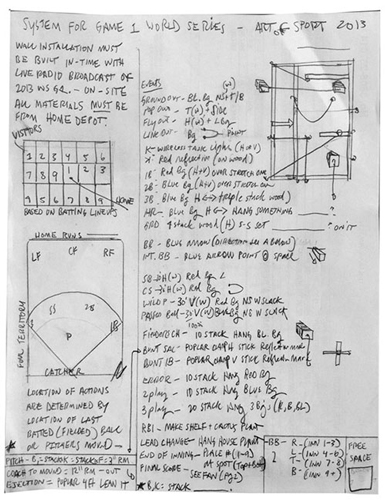
Looking at Lee Waltons game drawings, develop a set of rules for your own drawing using line weight, direction, graphite, color ( 10+ - may be 4x6, 5x7, etc uniform pieces of bristol paper). Sit safetly outside a coffee shop, in a park, on a stoop OR be a virtual observer (scan a news feed, bing watch Netflix, scroll through instagram) create a series of small line “drawings” diagramming action. Alternatively this may be a self portrait where you observe your own actions, feelings, and movements. For the first week try at least 3 different observations or iterations of one of the observations. The final is a SERIES of 10 cohesive images - document using your photographic skills. Be sure to provide a key for each drawing. While these are sketches, think about presentation and what your overall drawing is communicating. Google Drive Hand in
Other examples: Sol Lewitt Wall pieces, Rachel Perry Welty Chiral Drawings, Francis Aly's Reel/Unreel, Jenny Perlin Sequences
Reading:
Read "Michel de Certeau "The Practice of Everyday Life: Walking in the City" use reading to guide and inspire the assignment. Take notes and please plan to discuss during crit and take notes to include in "process journal". In an artist statement please include references to the reading (quotes where appropriate) and how it influenced your project.De Certeau describes the traditional understanding of the city as one drawn from above, one of geometry, grids, and the perspective of a map maker. Through the chapter, "Walking in the City" he outlines a reading or understanding of the city from the perspective of the walker who unconsciously creates a new language or urban text through the individuals maneuvering of the space. Define synechdote and asyndeton in De Certeau's context. Find quotes that might inform your mapping project (3) . Click here for PDF of reading
(Google drive hand in)

PROJECT 2: News: Deconstructing /Reconstructing
News becomes history as soon as it is reported -Aleksandra Mir.
Using the newspaper as a point of departure respond.
Assignment:
Part 1: Collect 10 New York Times headline pages. Think about the "News" what you see and how you interpret. With a group, create a list of subject matter and or responses to subject matter.Part 2: How to manipulate / What to do with newsprint? Folding, cutting, painting , india ink, gouache (opaque watercolor), gluing, marking (sharpie, highlighter, etc.)
Part 3: Work in Progress Due Week 4-- Exploration: try 3 different methods with a clear IDEA share both in google drive folder.
Part 4: Final Due Week 5-- SERIES of 5 exploring one well thought out idea that you worked through during WIP.
Document using your photography skills - choose a wall to install! Diffuse daylight or light accordingly. Save as large jpgs upload to Google Drive folder
Take the physical newspaper as a point of departure, using the format of the complete headline or spread. If you choose a different format please discuss it with me.
This is a two+ week assignment and your final product should reflect this!
Reading:
Listen to "The Last Newspaper: Artist in Conversation Sarah Charlesworth, Aleksandra Mir, and Nate Lowman" Three artists engage in a discussion about their use (and abuse) of the daily newspaper in their art practices, as well as the importance of the newspaper in their daily lives. Please take notes and include on website. How does this influence your individual project? In a statement regarding your project please include quotes and reference to this interview. Google Drive (process journal and statement).EXAMPLES
Fred Tomaselli (painting and pattern)Walead Beshty (cutting and shape)
Alexandra Bell (omitting, mark making and highlighting)
Alexandra Mir, Newsroom (sharipie drawing and collaboration/memory)
Doug Ashford (painting and color)
Mira Schor (instagram and annotating the NYTimes) Lorraine O'Grady Cutting out the New York Times transforms found language into poetry
Becca Allbee Newspaper and Flower series (photography)
Laura Fields Front Pages Pictures of Woman and Page Three Sutra (pattern, color and painting)
Sarah Charlesworth (rephotographing and omission)
Suzanne McClellan (painting and text)
Donna Ruff (laser cutting shapes and burning)
Rikirit Tirivanija (text)
Adrian Piper "Vanilla Nighmares" (drawing)
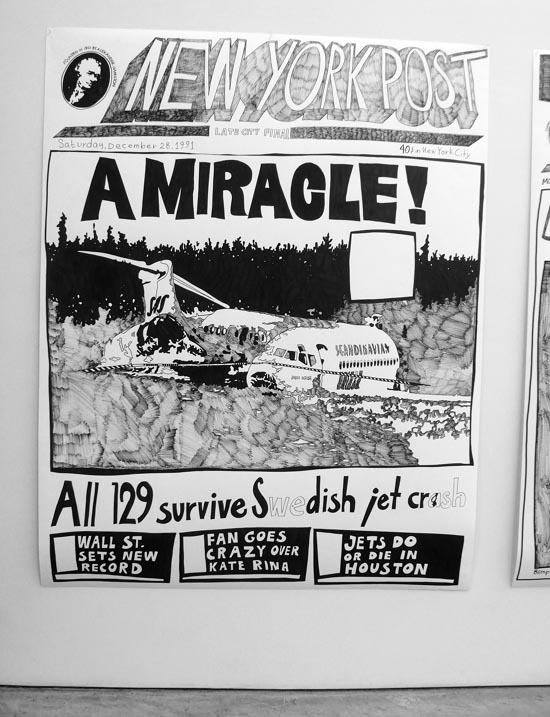
Robert Gober, September 12, 2005–9. Pastel and graphite, over photolithograph, on ivory wove paper
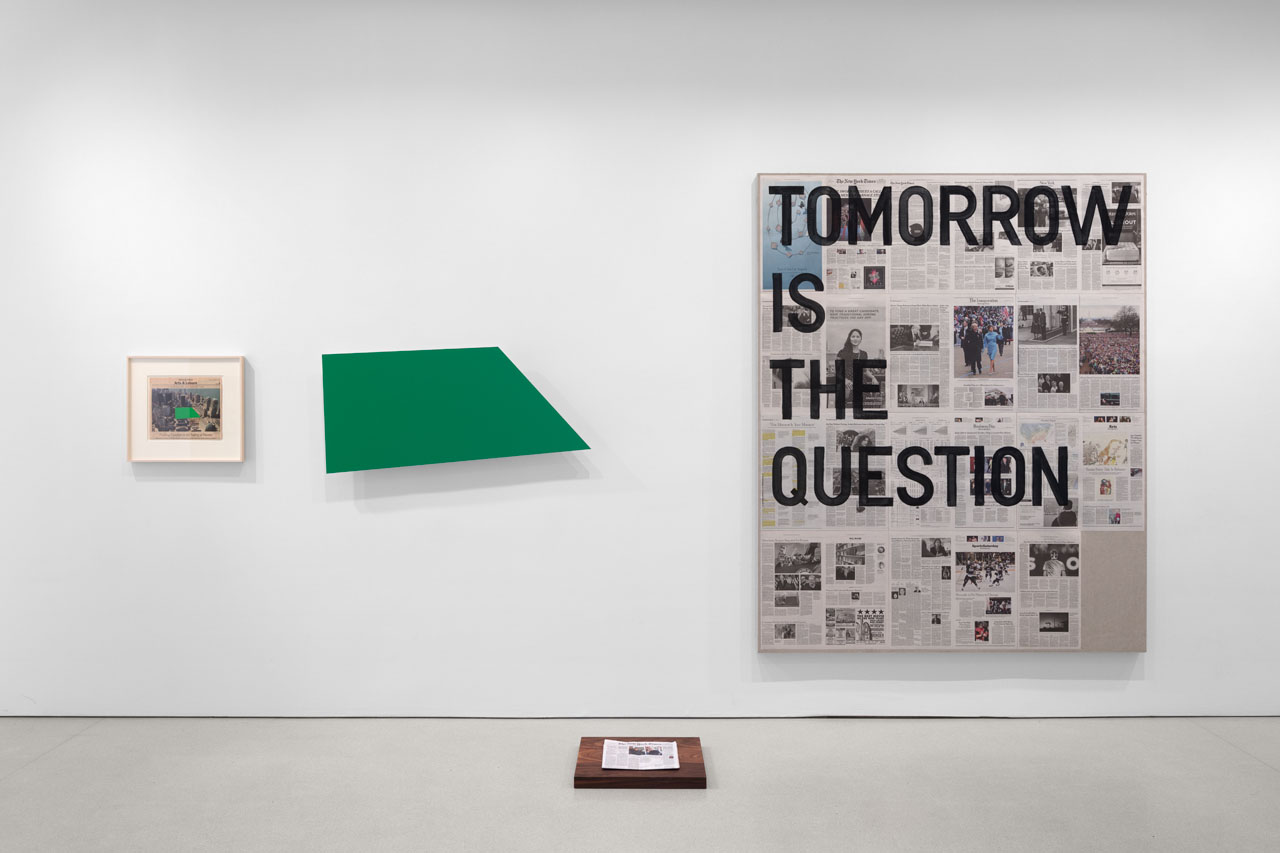
Flag Art Foundation "The Times", Ellsworth Kelly’s collage Ground Zero, 2003, Rirkrit Tiravanija’s untitled 2017 (tomorrow is the question, January 21, 2017), 2017
PROJECT 3: SHAPE + PATTERN + TEXTILE
A shape is created by a closed continuous line. There are two categories for shapes, organic or geometric. Singularly they are "statuesque." (Allan McCollum) repeated they become pattern or texture . How are shapes transformed? repetition / scale / representation / language, etc. We are taking a shape found in everyday, tracing it, transforming it, and using it to create a pattern that is ultimately outputed onto fabric. Think about how a useful object can be transformed or elevated into something else -- become a symbol, symbols can also become a sign of social status, cultural significance and wealth (think about objects in museums and collections as well as logos, emblems and flags). Address or question this importance in your shape. What happens when you repeat, inverse, mirror this shape? What happens when the pattern is printed onto textile? Respond to Medina's workshop!
Part 1: shoot everyday objects using dslr or cell phone (10+). Upload and convert to jpg.
Part 2:
- New Document for print<8x8 inch art board 150dpi (may also use 300dpi)
- Using Illustrator and the pen tool trace a found shape. Using Image<place
- Combine the shape with another shape (letter, geometric shape, organic shape or another found shape from the internet) to create a completely orignal shape
- Appearance: add a black stroke or optional:add color, gradient, use as a clipping mask and embed image
- Save individual shape and output as a png by selecting illustrator path(s) and Export "Save Selection" as png (scale to save a couple of sizes)
- Continue: Repeat / mirror / rotate to create a pattern/textile...Use object<pattern<make adjusting type of patterning and size. Make a sample of your pattern and save as a png (export save as)
- Repeat steps and make 3 variations...how can you take this beyond the formal, what happens to an everyday shape when you abstract it by tracing, transform and combine, repeat, rotate, pattern, transfer from screen to fabric?
- Final Output: using one or more of single shape to create a swatch at spoonflower.com (choose pattern method, swatch and fabric type (for a swatch there is only one cost). Please take a screen shot of your textile. order.
- Post 3 different patterns and final fabric swatch in your google drive folder along with caption information! Please write a brief statement to explain your design and idea that has evolved through the process (see below).
Shape Response: Respond to the Glendalys Medina's artist talk "Medina investigates how patterns like habits, perspective, and value structures download into our psyche" In your artist statement respond to the talk, including important quotes (taken from your process journal) and draw them into describing your own process and idea behind the project
Some examples:
Hayal Pozanti - language
Cheryl Donegan- Cheryl Donegan's gift wrap
Allan McCollum's Shapes Project and Individual Works project
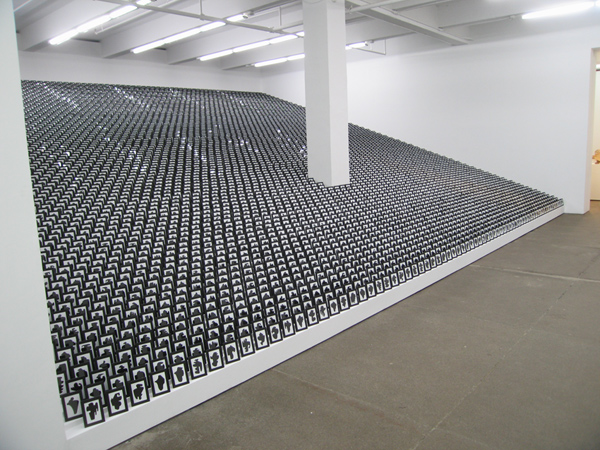
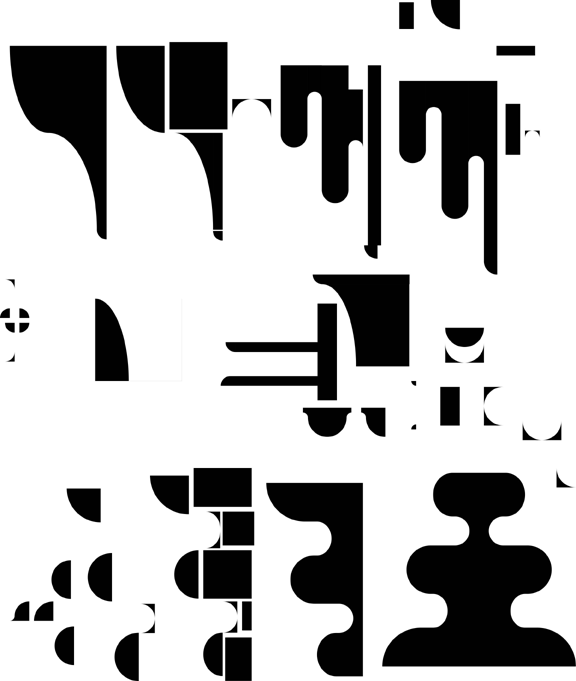
Allanm McCollum, Shapes Worksheet
PROJECT 4: a 3D MANIFESTATIONS
“Using the technology or misusing the technology.... is just a way of capturing a form...it’s really really a form of photography a 3D form of photography People were reluctant to accept photography for a number of years and the same thing with digital (3D)...There is resistance that a digitally sourced (object) can be (considered) an art piece.” Richard Dupont from the MAD video archive regarding his work in “Out of Hand”
Digital fabrication has been around since the 1990s (really since 1960s) Expiration of patents related to 3D printing technologies, making the desktop printer a commercially viable industry.
This project will explore the similarities, continuities and differences between 2-d photography and 3-d imaging. It is intended to evolve our 2-d process of picture taking and image making in our post-photographic world into 3d modeling/object. In the process we will play with the concept of “real” and simulation while exploring basic 2-d and 3-d notions of color and contrast, shape and form, organic vs geometric, scale, and texture and space!
Choose an object and a physical space that represents "conflict" directly, indirectly, abstractly or hardly. The conflict could be sourced in the news, about location, cultural, personal, about identity, gender, etc.
Stay Safe!
3D mesh generation shoot an object using a turn table (or make one using a bowl and a tripod) AND detail of a space or place. You will have the opportunity to both represent and transform/disturb the real and use technology/misuse technology. Prior to shooting please make sure your read through notes on "how to shoot" You will upload your Metashape model to sketch fab! Any additional work in progress is imperitive - image files of unsucessful and sucessful photoshoots, screengrabs from Metashape etc to show your process each week in your process journal.
FIRST WEEK: Introduction to Laguardia Studio/See Metashape Demo + exercise/ Shoot an object using the turntable method see how to. In all steps document your process - and ideas in your "process journal" in your google drive folder.
SECOND WEEK Metashape continued / shoot "SPACE" and reshoot if needed / "process journal"
THIRD WEEK: Metashape continued / PRINT /Upload to Sketchfab / artist statement including reference to reading
REFERENCE:
Required Reading: Post-Photographic Presences or How to Wear a Digital Cloak, by Haidy Geismar (see handouts or link) / Screen The 3D Additivist Manifesto by Morehshin Allahari
Reading Prompt: Using Geismar and your own words - define and describe your post-photographic experience. While our goal is to output an actual print of your object, how does your model differ from being a “digital surrogate” of the object you photographed according to Geismar... is this also your experience. Imagine the implications and possibilities which go beyond your initial experience / assignment. Does Geismar’s writing assist in the assignment, specifically creating an object of “conflict”? See examples in Moreshin Allahari's as well as Rosmarie Yu's work
Oliver Laric: Lincoln 3-D ScansMorehshin Allahyari - see an interactive exploration of Morehshin Allahyari's 3D prints http://browntourage.herokuapp.com/collabs/additive/
Mark Leckey Art Review / Video of Mark Leckey discussing ideas surrounding work
NYtimes:Augmented reality : https://nyti.ms/2ME9s9R / how to: https://nyti.ms/2I8F4Rv
TECHNICAL RESOURCES:
Metashape- basics of shooting objects on a turntable
SketchFab Class Examples
Project 5: MULTIPLES / DISTRIBUTION / EXCHANGE
APPROPRIATION
...indulging in borrowing, stealing, appropriating, inheriting, assimilating... being influenced, inspired, dependent, indebted, haunted, possessed... quoting, rewriting, reworking, refashioning...a re-vision, re-evaluation, variation, version, interpretation, imitation, proximation, supplement, increment, improvisation, prequel, pastiche, paraphrase, parody, forgery, homage, mimicry, travesty, shan-zhai, echo, allusion, intertextuality and karaoke.
Techniques (taken from Michalis Pichler's critical essay "Appropriation"):
- the strategic use of found and pre-used material, be it image, object, sound, text or thought
- the use of an existing layout scheme or corporate identity
- the 1:1-use or paraphrase of a historic book title, using the same or alluding words, syntax or rhythm
- the reenactment of an "old" concept with "new" material
- the reenactment of "old" material with a "new" concept
- if a book paraphrases one explicit historical or contemporary predecessor in title, style and/or content, this technique is what I would call a “greatest hit”-- Michalis Pichler, 2009, Printed Matter
Assignment:
Continuing with exploration of conflict, create an artist book or 'zine using appropriated images that reflects our 'time' our current socio political situation.
Part 1 (homework): COLLECT imagery on any chosen subject(s). Imagery may be collected from a variety of sources - Letters, receipts, invoices, scratch paper, magazine, newspaper, texts, emails, social media feeds, video stills, images from news sites, google internet searches, etc. 20+ images
Part 2: TRANSFORM Appropriate directly or apply your own sort of "transformation."
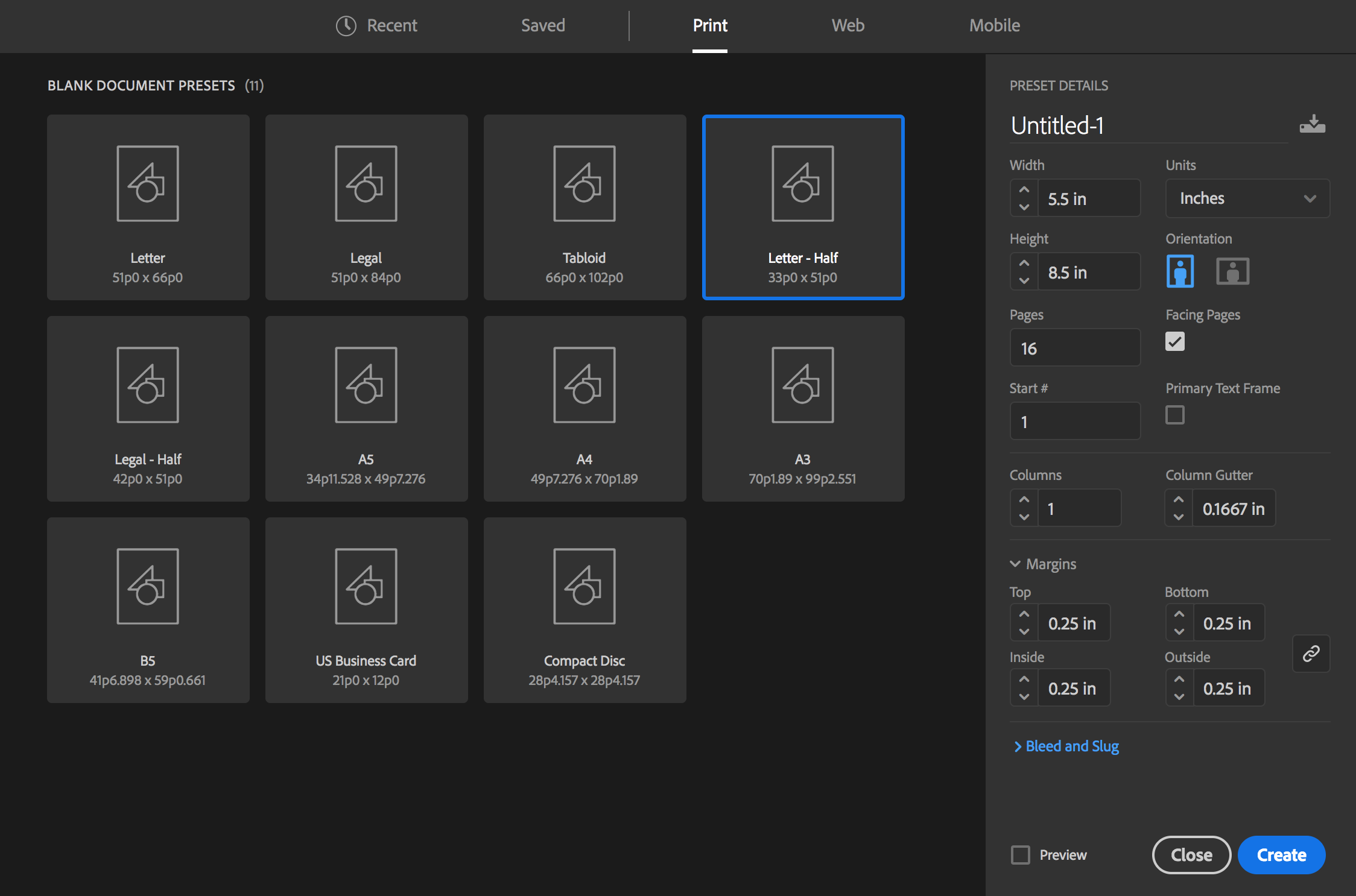
Part 3: Resize images and save as tif format at 300 ppi our sheet size is half letter or 5.5x8.5 inches approximately, Adobe RGB 1998 color space (please note that this does not have to be exact and you are locking your aspect ratio - if it is a vertical image set the image size to 8.5 inches and let the width remain) You may choose to crop images to an exact dimension. To prepare resize/sample up web images see pdf - please not size change for this project)
*please note that as stated in the syllabus you may not use a project or images completed in another course for this project.
Part 4 : Create Indesign booklet in class. Half-letter 5.5x8.5inches/ .25 in margin / 16 pages (can only add pages in increments of 4). This includes a front wrapper (avoid handling front and rear wrapper as part of content) Title and caption on rear and or front cover - may use text throughout selectively see Yo Cuomo indesign short cut booklet.
Artist Statement / Response: Respond to the Yuchen Chang's artist talk and workshop. In your artist statement respond to the talk, including important quotes (taken from your process journal) and draw them into describing your own process and idea behind the project (this should also include artist presented or from the list)

See Bringhurst The Elements of Topographic Style for notes on type and styling types
Part 5 (need access to a laser printer with double sided capablities -- department has one in the digital lab beyond print finishing / see document to print remotely): Print on Laser: Print to Booklet-(halfsheet)
Part 6 : Book binding workshop: folding booklets, creating a simple booklet stitch. How to here

Supplies: Exacto knife (ofal), metal ruler, binders thread and needle, booklet stapler(cage) additional workshop materials list
Artist and multiples to think about:
EXAMPES:
Richard Prince - 8-track
Ed Ruscha
-see Gagosian exhibit - Books & Co / publication "26 Gasoline Stations" 1962/ Eric Doeringer
Andy Warhol
Hank Willlis Thomas
Printed Matter
Daniel Gordon
Alexandra Mir's Publications in PDFs
Taryn Simon and Aaron Swartz Image Atlas
Ofer Wolberger
Penelope Umbrico: appropriates found imagery from internet
Oliver Broomberg and Oliver Chanrin
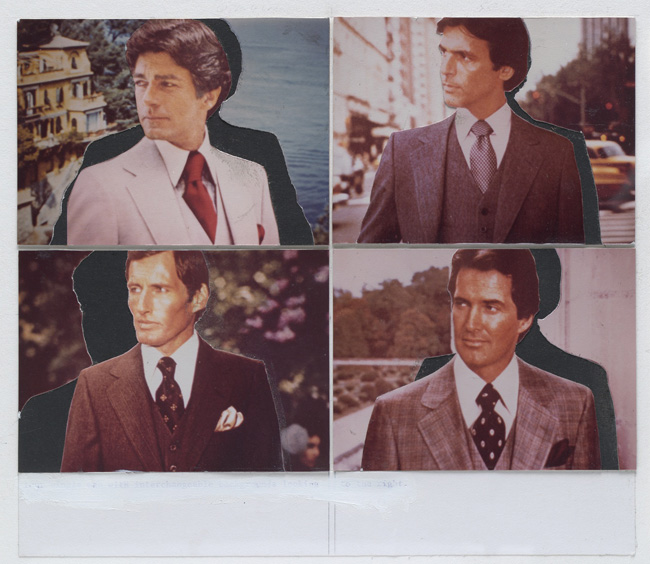
Richard Prince Untitled (four single men with interchangeable backgrounds looking to the right), 1977MET